
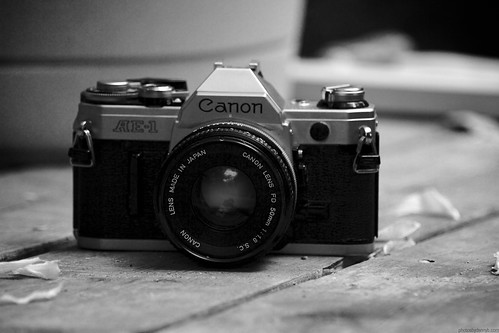
A Film Camera For Mugu

About nine months ago or so I was still living in the USA and corresponding via email with Donny about one of our young people at Harm’s End, Mugu, who is 17. The issue was Mugu had dropped out of the class he was taking to prepare him for what in India is known as the 10th Standard examination. It’s the equivalent of a high school diploma in the USA, and is a difficult exam requiring a long preparation, and Mugu didn’t have either the initiative or the discipline for it.

So we were wondering what to do with Mugu, and I brought up as I had in the past that Mugu seemed to have a thing for photography. Rather than putting him in some kind of class, Donny put forth the idea of getting him a film camera and teaching him film photography. My response was that nobody uses film cameras anymore, and that they’re a major expense compared to a digital camera, which, after the initial investment in the equipment itself, can take thousands and thousands of pictures. So I basically vetoed the idea, and as I would find out later Donny was actually okay with that. He thought a nice digital camera would be fine as well.

Then nothing happened for a while after that. I didn’t bring it up again because even though I was okay with a digital camera, I’m a cheapskate, and it would be a big chunk of change for a good digital camera with multiple lenses. I also know how irresponsible Mugu is, and was worried about the camera being lost or stolen. Then Donny brought up the film camera again, and again I argued against it. So he sent me a formation he had gotten from his muse on that matter, one that he felt had come from our teacher, the Mother, which said:

A digital camera
not the appliance he needs.
A professional camera
with lenses
develops his creativity.

Don’t mix tobacco in it.
A digital camera,
there’s a
camera
ain’t a camera
his art would say,
his art,
not mine, yours
or ours —
his camera.

 A boy and his needs.
He needs a camera
just to help him
become a good man.
Become a good man,
that’s our field.
Creativity lost his show
there’s no camera.
Digital not included.1

Now as clear as that was I still wasn’t ready to give up my position on the matter, mainly I think at this point because I didn’t want to be wrong, nor to be overruled by someone’s else’s guidance. My vital also has some problems with jealousy over the fact that I can’t get a formation like that from my muse, can only get some lines here and there or small groups of lines, and that also made the whole thing hard to swallow. So I continued to argue, pointing out that what might be spent on film alone over the course of a year would buy a very nice digital camera with multiple lenses. So Donny sent me another formation that had come a while before but that he hadn’t shared with me. This one said:

Professionality
a camera,
a camera
professionality.
Digital camera
is the wrong lens.
Now get it
Like you’re supposed to
a lens camera.
Douglas don’t want to buy the camera,
Don’t want to
Because it doesn’t make sense
to his practical
intelligence.

 Creativity deserves a chance.
You’re not thinking how involved he’ll be
with a professional camera.
A great occupation
color
photography.
Develop sway talent.

Would you listen?
Douglas has his own opinion.
How are we doing today?
Develop his own opinion.
That’s roll call,
Orange wares. 

Grand market
shopping
must be in town.
Oh it is.
Professional camera
with lens,
telephoto one,
wide angle,
and the one you use mostly. 

A lot of creativity
has room to play.
Amsterdam
doesn’t take him home.
Creativity rules.
What do we do for money?
Trust sweetheart,
just trust
and work.
There’s sadhana.2

Well after reading that I gave in, though the vital didn’t like it at all. By that point I was planning to come to India, but I wasn’t sure when, so Donny and I started looking online for a used film camera in India rather than waiting for me to buy one in the USA and bring it when I came. The search proved much more difficult than either of us were expecting and when we finally ordered a camera we didn’t read the fine print in the listing on ebay.in, and got one that was sold “as is”, and was basically broken. At this point I thought I could ask my mom if I could have my grandfather’s Canon AE-1, which had been sitting in my dad’s closet unused for years, to give to Mugu, and she said I could. So when I came to India back in December I brought that camera with me.

Then we ran into more obstacles. Both Donny and I had assumed that in a country as large as India there would be websites where you could easily buy the chemicals and darkroom equipment, but that didn’t turn out to be the case. You could find things scattered around on amazon.in and ebay.in but a lot of it seemed to be coming from the USA. So we went to a website in the USA, and could find everything we needed, but the shipping was almost as much as the cost of the chemicals and equipment. We had decided to just eat the cost, but then it occurred to me to call Auroville and try to find out if anyone there had a dark room, and knew how to order the supplies in India. From Auroville I got the name of an American man, John, who has lived in Pondicherry for many years, and was formerly an inmate of the Sri Aurobindo Ashram. I gave John a call and he invited Donny and I over to his house where we had a long talk, and he also gave us the name of man in Mumbai who could supply us with everything we needed. The way it all wonderfully worked out was just more confirmation for us that we were indeed doing the right thing with the film photography.

So we got all the chemicals and equipment to start Mugu with black and white photography. All that remained was a dark room, which is almost completed. Once it is John has offered to come over and give us some pointers from his long experience with film photography. There’s every reason to hope this will be a very positive thing for Mugu, and give him a much needed focus and creative outlet, one that will help him, if Donny’s muse is correct, to be a better man.

Notes

  1. Copyright Donny Duke
  2. Ibid.

My Mind Relief From Madness

About a month ago my mind and vital was in the grip of something. I don’t remember what now exactly, but it was something that had been troubling the  mind and holding it under siege for a couple of days. I wanted to get free of the movement but was having trouble doing so. Then I received these lines from the muse in the morning:

Don’t muddy the mind courts (Came at the end of a dream where I was watching a performance of the hip hop group Run DMC)
My mind relief from madness
Mooning.

The first line’s advice was pretty clear, and motivated me to really try and throw the disturbing thoughts out of my mind, but I was having only limited success. Then all of the sudden, in the evening, I noticed my mind got abnormally clear, and it didn’t take much effort to keep it clear. There was no peace or joy or anything, just a quiet, fairly focused mind. Still it was a welcome respite.

Sri Aurobindo says, among other things, that the moon is a symbol of the spiritual consciousness which is above our normal human mind. One of the main movements in the integral yoga is for the sadhak to not only ascend to this level (or levels I should say) of consciousness, but also for it to descend and transform these lower levels of mind, life and body as well with its peace, silence, light and bliss. So what happened here I think is I got ‘mooned’ by a descent from the spiritual consciousness which quieted my mind and gave me relief from the mind’s madness. It didn’t last and was gone the next morning, but it broke the momentum of the disturbing thoughts, and I was able to move past them. I imagine it was important that, prompted by the muse, I was making a strong effort to throw out the thoughts myself. That I feel opened the door to the descent from the spiritual consciousness.

Now as the reader has no doubt noticed, the first line came at the end of a dream. This is a fairly common occurrence, but I have to admit I often can’t make any connection between the lines that come at the end of a dream and the dream itself. A lot of the time the lines don’t seem to have anything to do with the dream.  Here though I can see a correlation between mud in the mind and hip hop music, which overall has a pretty low vibration, one that appeals to the less enlightened parts of the human vital.

Does anybody else see anything in these lines that they want to share in the comments?

I Want Struggles To Be Light

A few days ago this line from the muse came to me in the morning.

I want struggles to be light.

You can definitely play around with multiple interpretations of a line like this because of the different meanings for the word ‘light’. One interpretation jumps out right away if you take ‘light’ in the sense of something being not heavy or not dark in color. Read this way the line is saying that I want a lighter load of struggles.  There’s no doubt I feel that way often, and I’m sure most people reading this can relate to that sentiment. Another idea though along these lines has to do with my belief that what really makes struggles and pain so dark and heavy is this consciousness we live in which is a state of identification with this mind and body. But as many spiritual teachers have said throughout the ages, if you can enter into a consciousness where you’re identified with the divine, or oneness or whatever you want to call it then you realize that this mind and body isn’t you, is more like a shirt you’ve put on, and you don’t take what happens to them so seriously anymore. Then, even though life’s challenges are still there, they’ve lost their heaviness, and you no longer suffer from them. You deal with them from a state of Light or Knowledge and not a state of Ignorance.  Hand in hand with that idea is a complementary take on the line where ‘light’ means spiritual illumination. This gives the sense to me of struggles being spiritually illumined and transmuted.

Another interpretation that occurred to me takes ‘light’ in the sense of a ‘means of igniting something’ as in “Hey buddy, you got a light?”. It’s a less obvious reading of the line and one that probably wouldn’t have occurred to me if I hadn’t been thinking a lot about something I’d read in the Mother’s Questions and Answers a few days before. I’ll share the quote first before I get into the interpretation.

Quite naturally we ask ourselves what this secret is, towards which pain leads us. For a superficial and imperfect understanding, one could believe that it is pain which the soul is seeking. Nothing of the kind. The very nature of the soul is divine Delight, constant, unvarying, unconditioned, ecstatic; but it is true that if one can face suffering with courage, endurance, an unshakable faith in the divine Grace, if one can, instead of shunning suffering when it comes, enter into it with this will, this aspiration to go through it and find the luminous truth, the unvarying delight which is at the core of all things, the door of pain is often more direct, more immediate than that of satisfaction or contentment.1

So like the Mother says here I think the line could be interpreted in the sense of changing my attitude so that struggles and pain become more a means of advancing on the spiritual path, more a means of igniting my aspiration to go through them in order to reach that ‘unvarying delight’ than something that holds me back when I have  resistance to the pain or depression about the pain. Backing up this idea, I feel, is an experience I had with Medhanada’s Eternity Game two nights before I received this line and a few hours after I’d read the above quote from the Mother. That quote is part of a longer passage where she says a number of things one of which is “When pain comes, it comes to teach us something.”2 As I’ve mentioned in other blog posts, probably my biggest difficulty is contending with the constant chronic pain in my back and knees. So that night after reading the Mother’s words I asked the Eternity Game, “What’s the purpose of this pain?” The card I drew was ‘Dwarf’.

Europe 1997.3 25

In the Eternity Game this card represents the mental being, and as you can see its aspects are ‘Quest’, ‘Next Step’ and ‘Intelligence’. Medhananda gives detailed commentary on all the cards in the game, but he also gives short one sentence descriptions.  The short one he gives for the ‘Dwarf’ card is ‘advance, take the next step.’3 I took this as confirmation that I have to try and take the mental attitude the Mother recommends towards the pain so it becomes more a means of progress. I should point out that for me the fact that my reading of the  Mother’s words was followed by synchronicities with both the Eternity Game and my own inner guidance in just a matter of a few days stresses the need for this change in attitude. It’s not easy to do, and to truly surrender this pain is something I’ve been aspiring for for a while. Hopefully this will help me to take the ‘next step’ with that.

So that’s my take on things. Please feel free to share other ideas in the comments!

References

  1. Questions and Answers 1957-1958  by the Mother pg 41
  2. Ibid pg 42
  3. The Eternity Game by Medhananda pg 133


A Buddhist Couplet 2

Right now you are identifying.

Switch the master appearance.

The Strength is on the Distant

This line of guidance from the inner voice came to me some months back:

The strength is on the distant

The first interpretation that jumped out at me was the yogic technique of distancing yourself from undesirable lower movements, looking at them as not oneself and detaching rather than struggling with them. Looking at the line that way helped me to free myself from the weakened but lingering siege of a strong vital reaction that had gotten in the day before the line came.  Do any other interpretations jump out at anyone?